USA Poker Straddle Announcement Timing: The Pre-Deal Declaration Rule
Announcing a straddle after the cards are already in the air is a dead hand in every serious USA card room I have ever audited. The declaration must land before the dealer pitches a single card, and any floorperson who rules otherwise is inviting angle-shooting that poisons the entire table dynamic. 🃏 This is not a soft convention; it is a hard procedural boundary enforced by house rule, and the timing window is measured in seconds, not breaths.
The mechanical logic is brutally simple. A straddle is a voluntary blind increase that alters the preflop betting order, and once the shuffle completes and the cut card is pulled, the betting structure for that hand is locked. Announce it before the deal and the dealer can still adjust the action; announce it after the first card leaves the shoe and you have created a Schrödinger's pot where the straddler gains positional leverage while everyone else has already committed to a standard blind structure. That asymmetry is exactly the kind of edge a sharp player will exploit ruthlessly.
Why the Pre-Deal Window Is the Only Legitimate Window
In USA poker rooms from the Commerce to the Borgata, the timing rule exists because the straddle is fundamentally a positioning purchase. You are buying the right to act last preflop, and that purchase must be transparent and simultaneous with the blind posting. The moment the cards are dealt, the information environment changes—players can glance at their holdings and then decide whether a straddle announcement benefits them. That is textbook USA poker straddle announcement timing abuse, and any dealer who lets it slide is either green or complicit.
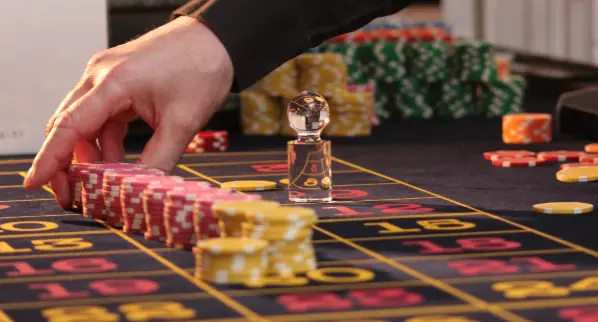
I have watched floors in mid-stakes rooms rule a late straddle announcement as void on the spot, and that is the correct call every single time. The announcement must precede the deal, must be verbal and audible, and must be directed at the dealer—not muttered to the neighbor. If you are whispering your straddle to the player on your left after the first card is out, you are angling, and the ruling should be a dead straddle at minimum and a warning at maximum.
The Dealer's Enforcement Protocol and Common Failure Points
Dealers are the frontline auditors here, and their protocol is unforgiving. Before the pitch, the dealer scans for a raised hand or a clear verbal declaration. Once the first card is dealt, the window slams shut. The most common failure point I see is the dealer accepting a late gesture and then calling the floor to "confirm," which creates a five-second limbo where the straddler can gauge table reaction. That is a procedural leak, and it undermines the integrity of before cards dealt in USA enforcement across the entire room.

Table captains need to drill one rule into every dealer: no deal, no straddle. The pre-deal declaration is not a courtesy; it is the structural firewall that keeps the voluntary blind from becoming a predatory information play. Rooms that tolerate sloppy timing end up with a culture of late announcements, and that culture spreads faster than any bad beat story. 🎯
Positional Leverage and the Cost of Sloppy Timing
Here is the technical kicker that most recreational players miss. A straddle announced before the deal is pure positional speculation—you are buying last action with zero information. But a straddle announced after the cards are dealt carries a hidden informational premium, because the straddler has already absorbed the table's body language and bet-sizing tells from the previous hand. That is not a blind structure; that is a data arbitrage play, and it corrupts the mathematical symmetry that makes the game auditable.
Enforce the pre-deal timing and the straddle remains a legitimate tool for action players. Let the timing slide and you have handed the straddler a free option on information that no one else at the table possesses. The gap between those two outcomes is the entire reason the rule exists, and any room that soft-pedals it is bleeding edge to the sharpest seats at the felt. 💰
Final Timing Benchmark
The declaration must be complete and acknowledged before the dealer's pitch motion begins. Not during the shuffle, not after the cut, not as the first card leaves the shoe—before. Rooms that codify this with a visible pre-deal marker or a dealer verbal confirm reduce disputes to near zero, and the straddle reverts to what it was always meant to be: a transparent, pre-deal blind escalation with no informational shadow attached.